
Can you move a 1977 mobile home? In the great majority of cases, yes — and the reason turns on one date. A 1977 home was built after June 15, 1976, the day the federal HUD Code took effect, which puts it on the favorable side of the single most consequential line in manufactured housing. That one year is the difference between a home most counties will accept and one many of them ban outright. We move 1977 units routinely across the Carolinas — from the mountains around Asheville and Boone to the Sandhills near Fayetteville and across the line into South Carolina — but a home this age has to earn it in two ways: its frame has to survive our inspection, and the destination has to allow it. This page walks both.
Why 1977 is the "good" side of the line
The pivot for every older manufactured home is June 15, 1976, when the federal HUD Code (24 CFR Part 3280) took effect and, for the first time, imposed a national construction and safety standard on manufactured homes — the steel frame, the hitch and running gear, anchoring and wind resistance, fire safety, and energy. A 1977 home was built under that code. It carries the red HUD certification label on its exterior end wall and a data plate inside naming its build date and wind zone, and it was engineered from the factory to be transported, set, and tied down to a federal spec. That is the exact standard a pre-1976 mobile home fails — which is why the two homes, barely a year apart in age, are treated so differently by the law and the zoning office.
Post-HUD clears the ban — but not every age cap
Here is the distinction that trips people up. Being HUD-Code clears the categorical pre-1976 ban — the rule under which many counties and nearly all parks refuse a pre-HUD unit at any age. It does not automatically clear a county's numeric age cap. Siting a manufactured home is governed by local zoning, and many North Carolina and South Carolina jurisdictions independently refuse to permit installation of a unit older than 10, 15, or 20 years. A 1977 home is roughly 48 years old, so in a county with a hard numeric cap it can still be turned away from a new setup even though it's post-HUD — and manufactured-home parks frequently set stricter age rules than the county. The UNC School of Government's manufactured housing and zoning overview lays out how localities are allowed to regulate placement by age and standard. The practical rule: towing a 1977 home is state transport law and doesn't bar it by age, but placing it is local zoning that sometimes does — so we check the receiving county first. The numeric-cap mechanics are unpacked on our mobile home age limit page.
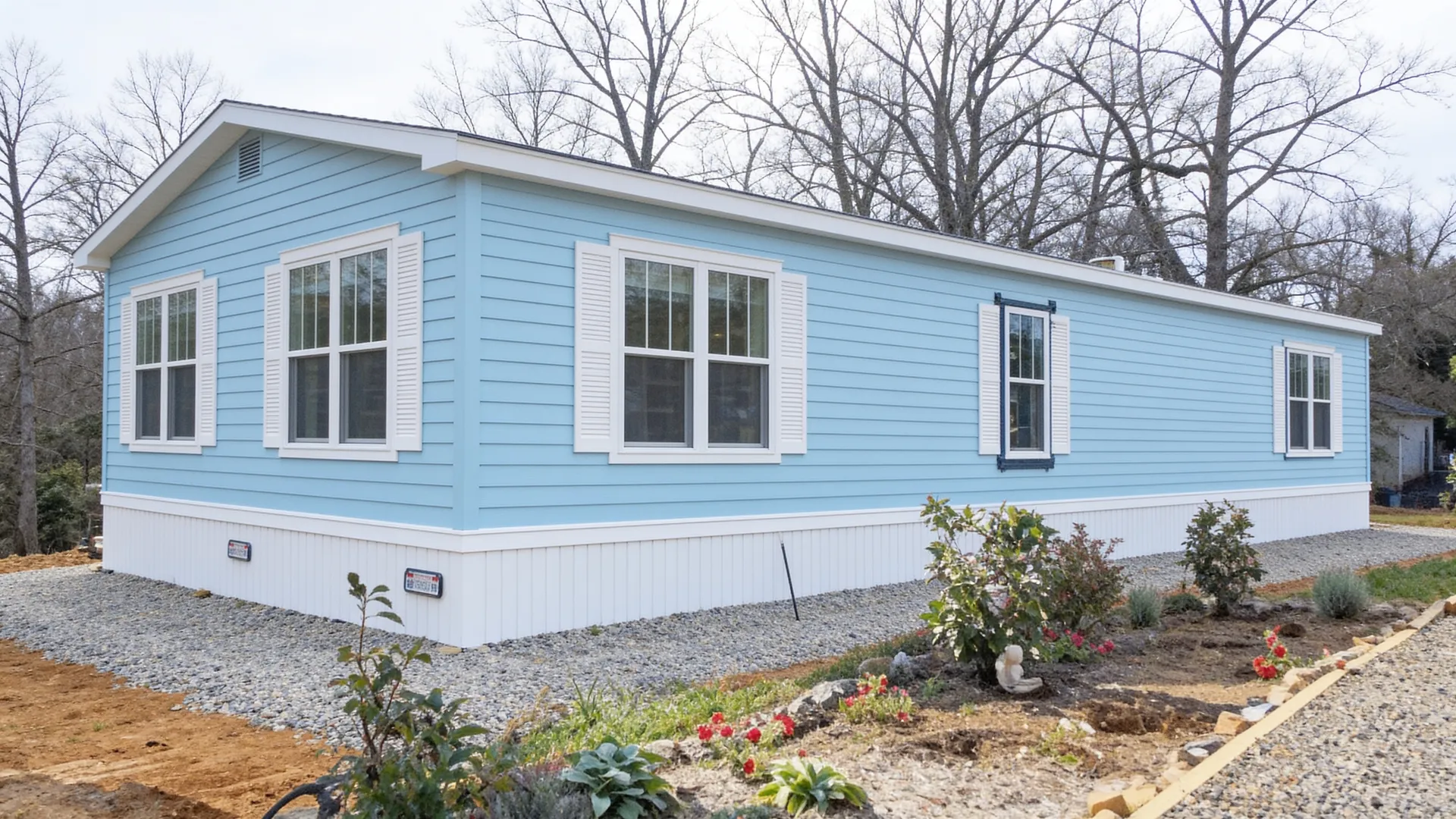
The condition question — 48 years on a pad
Clearing the legal side is only half the answer; a 1977 home still has to be physically road-worthy, and after nearly five decades that is a real question. Before we quote any move we inspect four systems, and on a home this age each one earns scrutiny. The steel I-beam frame and outriggers get checked for rust-through and fatigue; the hitch and tow points for structural soundness; the axles, tires, and brakes — almost always the first components that need replacing on a home that's sat for decades — for whether they can safely carry a highway haul; and the floor for soft spots that let the whole structure flex under tow. A well-maintained 1977 HUD-Code single-wide with sound running gear tows without drama. A badly corroded one turns a "move" into a move plus new axles, frame repair, and re-anchoring — and when that bill approaches the home's value, demolition is the honest call. We run the same chassis inspection detailed on can a mobile home be moved, then put the move number and, where the frame is marginal, the demo number on the same quote. How the distance factors in is covered on how far you can move a mobile home.
Permits and titling — no age surcharge in the law
The permit chain for a 1977 home is identical to any manufactured-home move; the build year doesn't add or remove a single requirement. In North Carolina the haul rides on a state oversize trip permit under the NCDOT Publication MH-2 rules, and the home can't legally leave its lot until the county issues a tax-paid moving permit under NCGS Chapter 105, Article 18 — which the tax office releases only after confirming the home's property taxes are paid. In South Carolina the equivalent authority is the moving permit under SC Code § 31-17-360. We pull both the road permit and the tax permit in the right order; the full mechanics are on our mobile home moving permit guide, and the state-by-state frameworks are on our North Carolina and South Carolina mobile home moving laws pages.
Move it, or is it time to demolish?
For a sound, well-kept 1977 home headed to a county that accepts it, the answer is simple: we move it, and the fact that it's HUD-Code keeps the destination door open. Where it gets closer is a 1977 unit with a corroded frame headed into a county with a tight age cap — there, you can be paying to rehab a chassis and fighting a zoning office, and the smarter spend is often demolition and haul-off, typically a few thousand dollars. We don't push either direction. We inspect the unit, confirm the receiving county's age rule, and hand you both numbers — move cost and demo cost — on one quote so you decide with figures instead of hope. Tell us the home's age and location on the form and Mobile Home Mover Pro returns a written answer within 24 business hours.