
The question how old can a mobile home be to move it in SC almost always comes from someone who's found a cheap older single-wide, or inherited one on a rural parcel, and wants to know if the state will let them haul it. The short answer surprises most people: South Carolina has no statewide age limit on moving a mobile home. The state's moving law is about money and safety, not age. Where age actually stops a home is somewhere else entirely — at the county line where it's going. We move manufactured homes across South Carolina, and on an older unit the first thing our crew does is separate the two questions people wrongly merge: can this home legally travel, and will the destination let it land. Both have to be yes, and neither is decided by a single "too old" number.
The state permit doesn't care how old the home is
South Carolina routes every mobile home move through one statute: S.C. Code § 31-17-360, part of the state's broader Title 31, Chapter 17 manufactured-housing law. Read it and you'll notice what isn't there — age. The statute conditions the moving permit on two things: the county treasurer certifying that property taxes on the home are paid, and the home's utilities being properly disconnected. The permit is issued by the county licensing agent as a decal on the home. That's the whole gate. A brand-new 2025 double-wide and a 1984 single-wide clear the identical § 31-17-360 process, because the state's concern is unpaid taxes and live utilities, not the model year. So at the state-permit level, the answer to "how old is too old" is: there is no such age. We pull that permit and coordinate the treasurer's tax clearance early, on any home regardless of vintage — the mechanics are laid out on our mobile home moving permit guide and the full statewide walk-through on South Carolina mobile home moving laws.
The age wall is at the destination county, not the state
Here's where the real limit lives. Towing a home is governed by state transport law; siting it — putting it down on a parcel and hooking it up — is governed by county and municipal zoning, and that's where South Carolina's age rules actually sit. The local office that issues the setup permit routinely enforces an age cap, refusing to permit installation of a unit older than roughly 10, 15, or 20 years, and it may confine manufactured homes to certain districts. These ordinances vary county to county and even town to town — a home welcome in one jurisdiction can be flatly refused in the next one over. The UNC School of Government's manufactured housing and zoning summary explains how localities are empowered to regulate placement by age and district. The practical consequence is blunt: a home can clear its § 31-17-360 permit, ride the road perfectly legally, and still have nowhere legal to land if the receiving county's ordinance says it's too old. That's why we confirm the destination county's rule before anyone pays for the move — whether it's headed for Spartanburg County in the Upstate, Richland County in the Midlands, or Horry County on the coast.
June 15, 1976: the one line almost every county draws
Above the patchwork of local age caps sits one date that behaves like a floor across the whole state: June 15, 1976. That's the day the federal HUD Manufactured Home Construction and Safety Standards — 24 CFR Part 3280 took effect, setting the national frame, fire-safety, and wind-anchoring standard every manufactured home has been built to since. A home older than that line is "pre-HUD" — it was never engineered to those standards — and South Carolina counties treat pre-1976 units as higher-risk and lower-value. In practice, most SC counties bar a pre-1976 home from being placed at all, and a good number won't even let one relocate within the county. Newberry County is a clean example: its §150.26 ordinance prohibits moving a pre-1976 home into or within the county, with one narrow same-owner exception. So if your home predates June 15, 1976, the age question usually answers itself — and the realistic paths become a demolition to clear the lot or, if it's still sound and a county will take it, a removal hauling it off intact. The whole pre-HUD picture is unpacked on can you move a pre-1976 mobile home.
The real ceiling on transport is the chassis, not a number
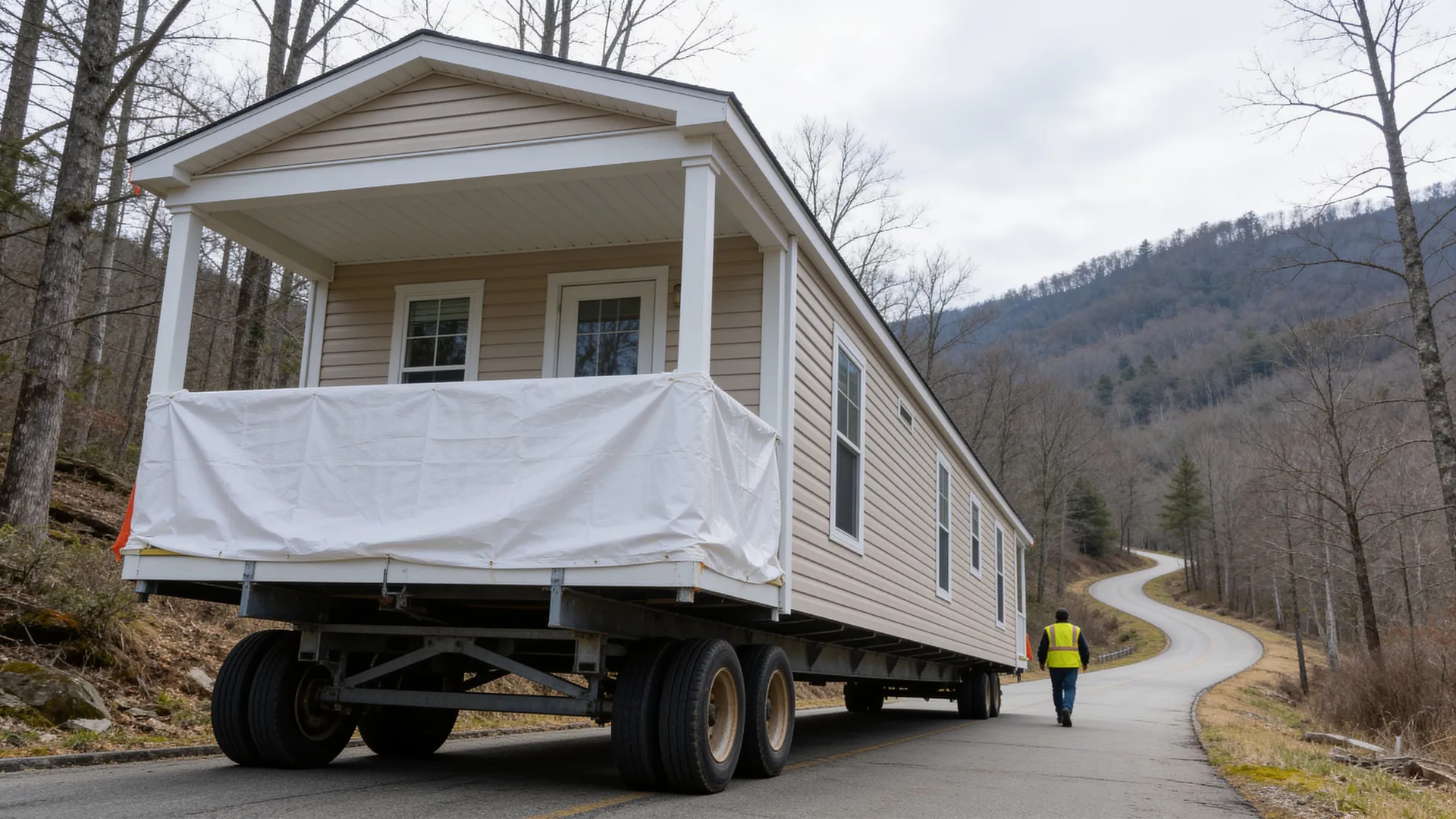
Set the ordinances aside for a moment, because there's a second limit that has nothing to do with law: whether the home can physically survive the haul. A manufactured home rides on its original steel frame, hitch, axles, and tires, and on an older unit those are the parts that fail. Decades of sitting on blocks corrode the frame, flat-spot or rot the tires, and seize the axles; the hitch may be gone entirely. When we inspect an older home, road-worthiness is the constraint that actually decides the job — not the calendar. A tidy 1988 double-wide with a sound chassis is a routine move; a 1979 single-wide that's been settling into the dirt for thirty years may need new axles, tires, and frame repair before it can legally and safely tow, and at some point that spend outruns the home's value. This is exactly why we inspect before we quote: you get an honest read on whether the age has degraded the structure past the point of a sensible move, and if it has, we say so instead of selling you a haul that ends in a ditch. Condition is also the biggest reason an older-home quote moves around — see how much it costs to move a mobile home.
Proving the home's age — and what happens across the NC line
Because both the county ordinance and the pre-1976 floor turn on the build date, proving the age matters. The definitive marker is the red HUD certification label riveted to the exterior end wall of each section — required on every home built since June 15, 1976, so no red tag almost always means pre-1976. Backing it up are the interior HUD data plate (a paper label in a cabinet or closet listing the build date and wind zone) and the title's model year. Many ordinances presume an unknown-date home was built on January 1 of its model year, so a missing tag pushes a borderline unit toward the older, more-restricted reading. Our crew checks all three on the first visit. And if the move crosses a state line — say a South Carolina home headed north — the rule flips to the destination's jurisdiction: North Carolina's county age caps and its NCDOT MH-2 and NCGS 105 permit track govern the landing, on top of the SC-side severance and § 31-17-360 clearance. That two-state, older-home scenario is the most paperwork-heavy job we run, and it's our specialty — the walk-through is on moving a mobile home across state lines and North Carolina mobile home moving laws. Wherever the home is going, tell us the build year and the destination and we'll tell you fast whether it can move, set, and what it will take — our South Carolina coverage runs from the Upstate to the coast.