
Moving a mobile home from Spartanburg to Columbia is one of the most routine manufactured-home runs in South Carolina — and, mechanically, one of the easier cross-region hauls in the state. The two cities anchor the I-26 corridor between the Upstate and the Midlands, and homes move between them constantly: a family leaves Spartanburg County for work in the capital, a home gets bought off a Spartanburg lot for a parcel near Newberry, an investor relocates a single-wide from the Upstate down to Richland or Lexington County. The mileage is short — roughly 90 to 95 miles — and the terrain drops gently from Piedmont into the Midlands sandhills with no mountain grade. Because both cities sit inside South Carolina, this is a single permit regime, which is genuinely simpler than a cross-state NC↔SC move. Mobile Home Mover Pro is a licensed mover that runs this corridor under one crew, start to finish.
The real route: I-26 East through Clinton and Newberry
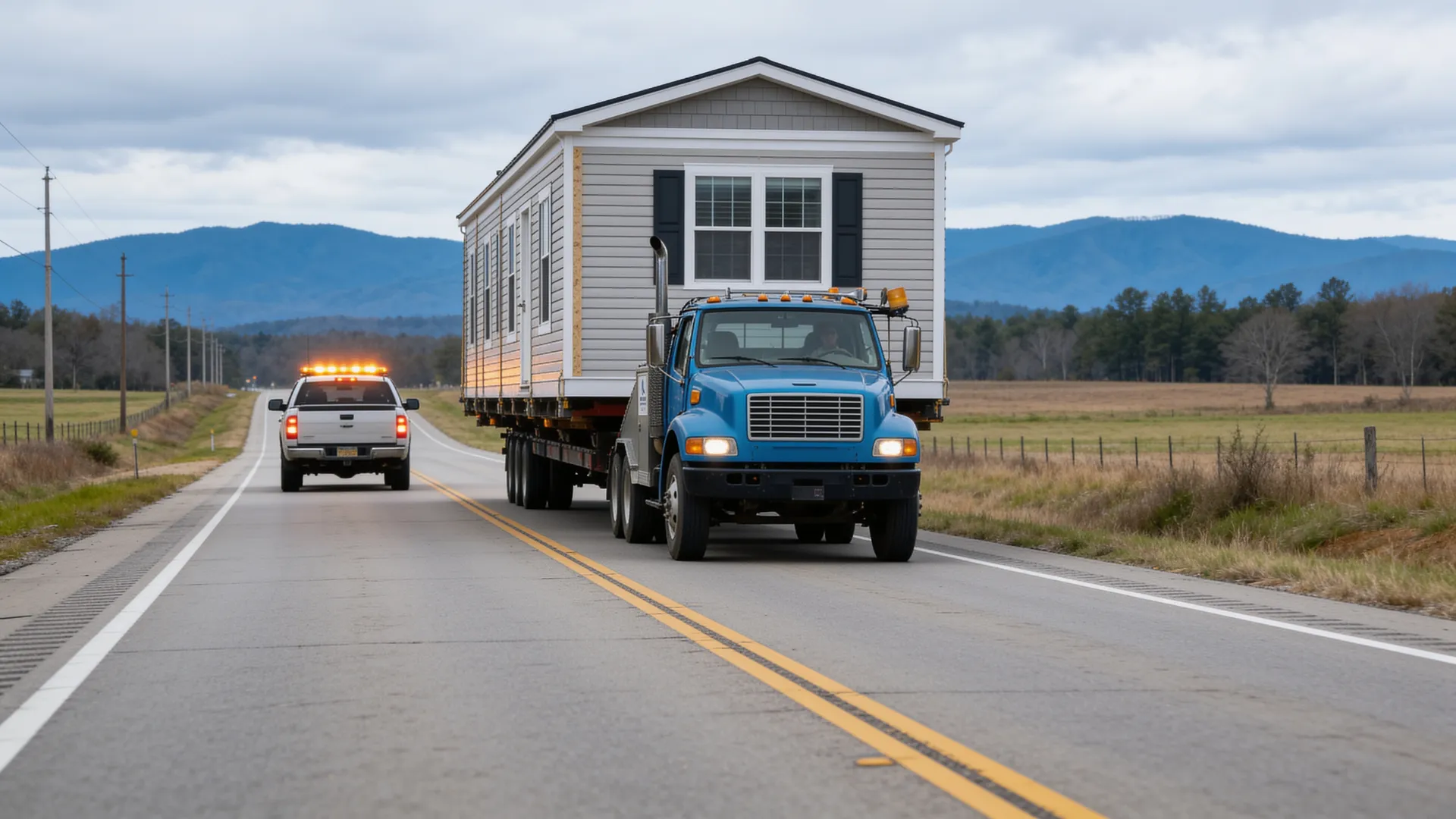
There's one dominant corridor between Spartanburg and Columbia, and it's the obvious one: I-26 East the whole way. The route runs Spartanburg out past Roebuck, down through the Clinton–Laurens stretch in Laurens County, past Newberry in Newberry County, and into the Columbia metro where I-26 meets the I-20 and I-126 interchange complex on the edge of Lexington and Richland counties — about 90 to 95 miles and roughly 1.5 hours under normal traffic. When a low bridge, an active work zone, or a width restriction on the freeway makes the interstate the wrong call for a particular load, the backup is the older US-176 surface line, which shadows I-26 through the same Midlands towns. Spartanburg sits around 800 feet of elevation and Columbia around 290, so the haul trends gently downhill — unlike a foothill or mountain run, the routing question here is almost entirely about bridge height, lane width, and interchange geometry rather than grade. We drive the chosen route ahead of the move to confirm the 14-ft-tall load clearances, the older overpasses, and the turn radii before a wheel turns.
One permit regime — but two county tax gates
The good news on an intra-SC move is that you clear one state permitting system, not two. The home moves under a county moving permit issued under SC Code § 31-17-360, and that statute is explicit that the permit cannot be granted until the county treasurer certifies the property taxes are paid on the home and the utilities are disconnected — the permit then takes the form of a decal carried on the unit during travel. The over-width haul itself travels under SCDOT oversize/overweight movement rules, which fix the daylight travel window, the wind cutoff, the routing around low bridges, and the number of escorts that scale with the load's width. What people miss is that the county tax-clearance step still runs twice: Spartanburg County certifies taxes are current and issues the moving permit at the origin, and Richland County recognizes the same clearance when the home is sited at the destination. A back-tax balance in either county freezes the move until it's settled — which is exactly why the title and tax steps are started the day the job is booked, not the week of the haul. The county-level mechanics are documented on our mobile home moving permit guide and the full state framework on our South Carolina mobile home moving laws page.
Titling: severance before the home can travel
Permits get the home down the interstate; titling decides whether it can legally move at all. Most settled manufactured homes around Spartanburg have been detitled to the land — converted to real property — and a home titled to the land can't just be towed away. It has to be severed back to a movable title first, traveled, and then re-sited (and often re-detitled to the land) once it reaches the Columbia area. South Carolina handles severance, the moving-permit decal, and the title action through a severance affidavit filed with the SC DMV, after which the § 31-17-360 decal can issue. The procedural detail — affidavits, forms, and which office signs off — is documented by the Manufactured Housing Institute of South Carolina. This is the step that most often stalls a sale or refinance, so we start the title chain the day the move is booked, not the week of the haul.
Clearance and escorts on the I-26 corridor
What makes the Spartanburg-to-Columbia corridor easier than most cross-region hauls is what it lacks: no Blue Ridge climb, no Saluda Grade, no sustained mountain descent to brake-manage. I-26 between the two cities is a wide, modern freeway with generous shoulders, which keeps escort logistics simpler than an Upstate-mountain or coastal route. The constraints that remain are the ordinary ones for an oversize manufactured home: overhead clearance at older interchanges, lane width through the recurring I-26 work zones, and the daylight-only, weather-restricted movement window. South Carolina runs its own escort rules — an over-width home travels with escort vehicles sized to the load's width, and for the widest loads SC can require a law-enforcement escort rather than a civilian one, which is a real scheduling and cost difference at the upper widths. We build those travel windows into the schedule up front and confirm clearances on the ground, so a routine corridor stays routine. The full escort thresholds — and how SC differs from NC's certified-EVO system — are on our mobile home transport escort requirements page, and the equipment side on our mobile home transport overview.
Single-wide vs. double-wide on this corridor
A single-wide moves in one section and clears this corridor about as cleanly as any route in the state; budget the $3,000–$8,000 band, and because the haul is short and mostly downhill, most Spartanburg-to-Columbia quotes land in the lower-to-middle half. A double-wide travels as two sections and runs $7,000–$15,000, because each section is permitted, escorted, and hauled, then re-married at the destination. On this route the limiting factor is rarely the interstate miles — it's the destination access road in the Columbia metro, where tight infill lots, low utility lines, mobile-home-park lane radii, and restricted entrances around Richland and Lexington counties often force a winch-assist or a transfer to a shorter-wheelbase toter for the final pull onto the pad. The price is driven by distance, section count, and escort hours more than anything else, and the short, level corridor is exactly what keeps this run's pricing below a same-direction mountain or coastal haul.
Why one crew, door to door, is the whole answer
Even on a short single-state move, the failure point is a handoff — a mover who pulls the permit but subs out the escorts, or hauls the home but leaves the setup to someone else. The seam between two companies is where permits, escorts, and the travel-day schedule fall through the cracks. Mobile Home Mover Pro closes that seam: we pull the § 31-17-360 moving permit, clear the Spartanburg and Richland county treasurers, handle the severance and title action, dispatch escorts to the load's width, drive the I-26 haul, and set, level, and anchor the home on the new pad — one chain of custody from the old lot to the new one. Both ends of this corridor are metros we serve directly: mobile home movers in Spartanburg, SC at the origin and mobile home movers in Columbia, SC at the destination. If your move instead crosses the state line into North Carolina, moving a mobile home across state lines walks through the dual-permit chain. Put your origin, destination, and unit type on the form and we'll price the whole Spartanburg-to-Columbia move — permits and escorts included — within 24 business hours.