
Moving a mobile home from Columbia to Myrtle Beach is one of the steadiest corridors we run in South Carolina — the Midlands and the Grand Strand are tied together by family, retirement, and coastal investment, so homes move between them constantly: a single-wide leaving a Richland County park for land outside Conway, a double-wide bought in the Columbia area and headed for a lot near the beach. Because both ends sit inside South Carolina, this is an in-state move under one permit regime, not a cross-state job with two of everything — which makes it simpler than a NC↔SC haul, but it is by no means a short or casual one. It's 150 miles of coastal plain, two county tax gates, river-swamp crossings, and a coastal setup at the end. Mobile Home Mover Pro is a licensed mobile home mover that runs the whole corridor pad to pad.
The route: US-378 to US-501, Midlands to Grand Strand
The Columbia-to-Myrtle Beach corridor is a flat, fast run on paper and a careful one in practice. The workhorse path is US-378 east out of Columbia, carrying through the Midlands and into the Pee Dee, then tying into US-501 through Conway and on into Myrtle Beach. Many of our hauls instead start on I-20 east to Florence, pick up US-76 / US-378, and stay on divided highway as long as possible before committing to the US-501 final leg — the choice depends on the load's width and the bridge clearances that day. Straight-line it's roughly 150 miles and about a 2.5-hour drive in a passenger car, but a permitted oversize manufactured home moves slower and only inside the legal daylight travel window, so we plan it as a focused single-day haul with the route pre-cleared. The terrain is forgiving — flat coastal-plain pine and farmland, no mountain grades — but the back half crosses the Pee Dee and Waccamaw river-swamp bottoms, where low bridges, narrow two-lane shoulders, and overhead clearance get tight, and the Conway/Myrtle Beach approach on US-501 is heavily signalized and congested. Those are the real routing problems, and they're solved before travel day under South Carolina's oversize-permit rules, not improvised on the shoulder.
One state, one permit statute — but two county tax gates
The thing that makes an in-state SC move cleaner than a cross-state one is that it runs under a single statute. The moving permit is issued under SC Code § 31-17-360, the same law from origin to destination, and there's no second state's oversize regime or interstate operating authority to stack on top. What does not simplify is the tax-clearance gate, because that runs at the county level and a Columbia-to-Myrtle Beach move touches two of them. The statute won't let the permit issue until the county treasurer certifies the home's property taxes are paid and the utilities are disconnected — so we clear the Richland County treasurer before the home leaves the origin and the Horry County licensing agent issues the moving permit and decal at the destination behind its own treasurer check. An unpaid balance in either county freezes the move until it's settled, regardless of how the haul itself prices. The full statute, decal, and tax-clearance mechanics are broken out on our South Carolina mobile home moving laws guide, and the cross-state version of this chain lives on our moving a mobile home across state lines page.
Titling: severing the home before it can legally travel
Permits get the home down the highway; titling decides whether it can legally leave its pad at all. Most settled manufactured homes around Columbia have been detitled to the land — converted to real property — and a home titled to the land can't just be towed away. It has to be severed back to a movable title first, traveled, and then re-sited (and often re-detitled to the land) once it reaches the Horry County site. South Carolina handles severance, the moving-permit decal, and the title action under § 31-17-360 and through the SC DMV. The procedural detail — affidavits, forms, and which office signs off — is documented by the Manufactured Housing Institute of South Carolina. This is the step that most often stalls a purchase or refinance on either end, so we start the title chain the day the move is booked, not the week of the haul. Our mobile home moving permit guide walks the whole filing sequence.
Escorts and oversize clearance on the Pee Dee corridor
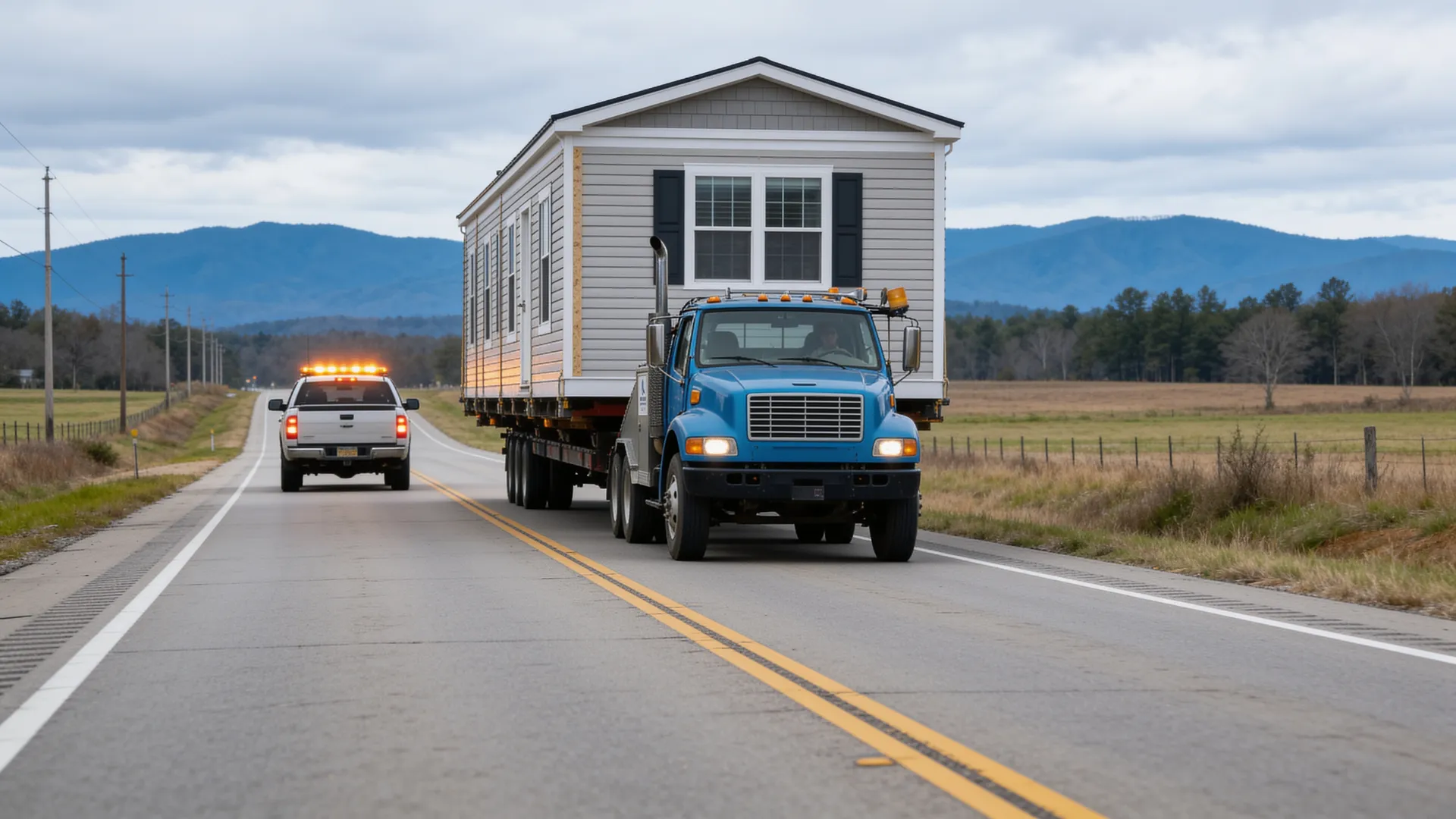
An over-width manufactured home needs escort vehicles for this run, and South Carolina sets the rules: front and rear escorts scale with the load's width, and for the widest loads the state can require a law-enforcement escort rather than a civilian one. The Columbia-to-Myrtle Beach corridor is where that matters, because the divided-highway sections through Florence are easy but the two-lane stretches across the Pee Dee swamp bottoms and the congested US-501 approach into Conway are exactly where a wide load needs the escort and the pre-cleared route. We arrange the escorts to South Carolina's spec, confirm overhead clearance for a 13- to 14-foot-tall load across every bridge on the line, and lock the routing before the home moves. Because the whole job is one state and one crew, the escort, permit, and travel-day timing all sit with the same company — no seam in the middle.
Coastal setup: the Grand Strand wind zone changes the anchoring
The part of a Columbia-to-Myrtle Beach move people underestimate is the setup at the coast. A Grand Strand pad sits in a stronger wind environment than the Midlands, and the home has to be anchored to match. Myrtle Beach falls in a higher HUD wind zone than Columbia, which means a heavier tie-down and ground-anchor package — more frame ties, auger anchors rated for the coastal exposure, and anchoring engineered to the federal standard under 24 CFR 3280 Subpart G. A home that was fine on an inland pad in Richland County needs more anchoring to be code-compliant on a Horry County site near the beach. We block, level, and anchor the home to Horry County's requirements as part of the same job, so it's sited to code the day it lands rather than flagged at inspection later.
Why one licensed crew runs the whole corridor
Stack it up — a 150-mile coastal-plain haul, two county tax-clearance gates, a severance and title action, river-swamp clearance, escort coordination, and a heavier coastal setup at the end — and the move rewards a single crew owning the whole chain. We clear the Richland County treasurer, sever and re-title through the SC DMV, pull the Horry County moving permit and decal under § 31-17-360, book escorts to the state's spec, run the home down US-378 and US-501, and block, level, and anchor it to coastal code on the new pad. One company, one chain of custody, from the old lot to the Grand Strand. Put your origin, destination, and unit type on the form and we'll price the whole pad-to-pad move, permits and setup included, within 24 business hours. If you're not sure your specific unit can make the haul, start with mobile home movers Columbia, SC for the origin metro, or see the destination at mobile home movers Myrtle Beach, SC.