
In-state · I-26 corridor · ~112 mi · One SC permit regime · Lowcountry haul

Moving a Mobile Home from Columbia to Charleston

A Columbia-to-Charleston move runs straight down I-26 and stays inside South Carolina the whole way — one permit regime, not two. But the Lowcountry end brings its own clearance and escort challenges, and the move still clears two county offices. Our crew runs it pad to pad.

Licensed & insured · NC & SCNCDOT-certified escorts24-hour written quoteOne crew, start to finishPermits pulled in every county Licensed & insured · NC & SCNCDOT-certified escorts24-hour written quoteOne crew, start to finishPermits pulled in every county

Get a free quote

Back within 24 hours — no obligation.

Goes straight to our crew. We never sell or share leads.

Quick answer
Can a mobile home be moved from Columbia, SC to Charleston, SC, and what does it take?
Yes. It's about a 112-mile haul down Interstate 26, and because both ends sit in South Carolina it clears one permit regime, not two: an SC § 31-17-360 county moving permit issued by the destination county's licensing agent, gated on a Richland County treasurer tax-clearance certificate, plus an SCDOT oversize trip permit and escorts that honor the state's width thresholds. Mobile Home Mover Pro runs the home down I-26 under one chain of custody from the Columbia pad to the Charleston-area lot.

Moving a mobile home from Columbia to Charleston is one of the most common in-state hauls in South Carolina — the state capital to the coast, roughly 112 miles down a single interstate. Columbia sits at the center of the state's highway grid, Charleston anchors the Lowcountry, and families, dealers, and investors move homes between the two constantly: a single-wide leaving a Richland County park for land near Summerville, a double-wide bought outside Columbia and headed for a lot in Berkeley or Dorchester County. Because the whole move stays inside South Carolina, it clears one permit regime instead of the doubled chain a cross-state NC↔SC move carries — but the Lowcountry end has its own clearance and escort work, and the move still touches two county tax offices. Mobile Home Mover Pro is a licensed mobile home mover that runs the corridor as a single coordinated job, pad to pad.

The route: straight down I-26

The Columbia-to-Charleston corridor is a clean single-interstate run. Interstate 26 East is the spine of the whole haul: it leaves Columbia heading southeast, passes Orangeburg and St. George, runs through Summerville, then ties into the dense interchange network on the edge of Charleston where I-526 and US-17 meet I-26. Straight-line, it's roughly 112 miles and about a 1-hour-45-minute drive in a passenger car — but a permitted oversize manufactured home moves slower and only inside the legal daylight travel window, so we plan it as a focused single-day haul with the route pre-cleared. The terrain is flat the whole way — Coastal Plain through the middle, true Lowcountry near the coast — with no mountain grades to fight. The real routing work is the engineered detail under SCDOT oversize-permit rules: overhead clearance for a 13- to 14-foot-tall load against Lowcountry overpasses, low-bridge avoidance, the low-lying flood-prone stretches near the coast, and a clean path through the I-26 / I-526 / US-17 interchange complex around Charleston — all settled before travel day, not improvised on the shoulder.

One state, one permit regime — but two county offices

The advantage of a Columbia-to-Charleston move over a cross-state haul is that it doesn't stack two permit systems. The whole job runs under South Carolina's single regime: under SC Code § 31-17-360, the destination county's licensing agent — in whichever of Charleston, Berkeley, or Dorchester County the home is landing — issues the moving permit, and the statute won't let it issue until the Richland County treasurer certifies the origin-county taxes are paid and the utilities are disconnected. So while there's only one set of permit rules, the move still bridges two county tax offices: the origin treasurer who clears the taxes and the destination licensing agent who issues the permit. On the road, the haul runs under SCDOT oversize rules — the legal daylight window, the wind cutoff, the routing, and the escort count that scales with the load's width. The full state rule set is broken out on our South Carolina mobile home moving laws guide.
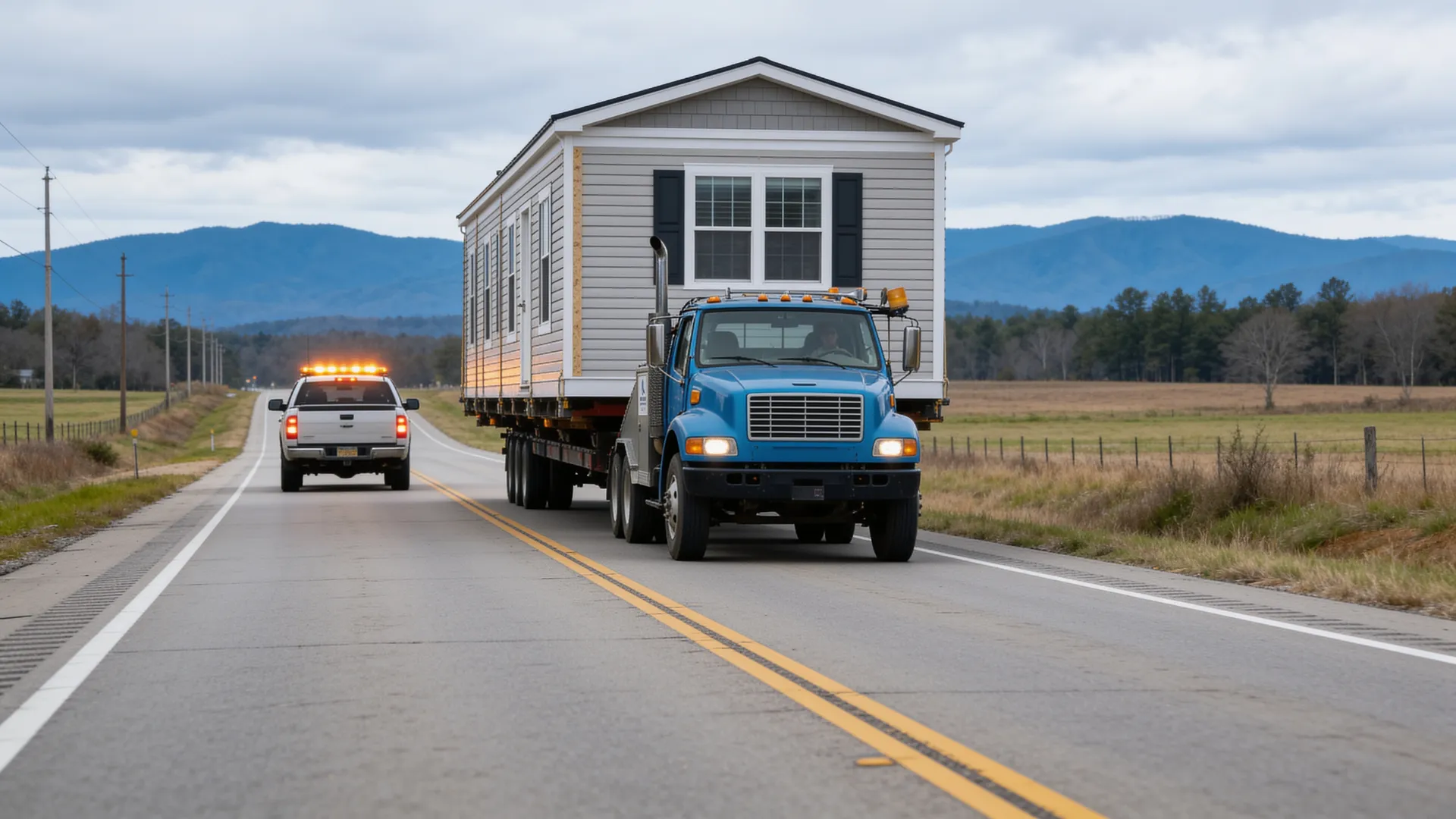
An oversize manufactured home traveling under escort on I-26 between Columbia and Charleston, South Carolina
The Columbia-to-Charleston haul travels under SC permit and escort the whole way down I-26 — one crew owning the chain from the Midlands to the Lowcountry.

The tax-clearance gate is the real scheduling risk

On an in-state move, the permit paperwork is straightforward — but it's gated. Section 31-17-360 ties the destination county's moving permit to a clean tax certificate from the origin county, so the single most common reason a Columbia-to-Charleston haul slips its date is an unpaid balance sitting with the Richland County treasurer. If the home was detitled to the land — converted to real property — there may also be a severance and decal step before it can legally travel, handled through the county and the SC DMV. The procedure for detitling and re-titling a manufactured home is documented by the Manufactured Housing Institute of South Carolina. We start the tax-clearance and title chain the day the move is booked, because a missed certificate or severance step is what stalls a Lowcountry closing or refinance — and it's the part that's easiest to settle early and most painful to discover the week of the haul.

The Lowcountry leg: escorts and clearance

The Columbia end of this corridor is easy Coastal Plain; the Charleston end is Lowcountry, and that's where the engineering lives. South Carolina requires escort vehicles for an over-width manufactured home, with the number of front and rear escorts scaling with the load's width — and for the widest loads, SC can require a law-enforcement escort rather than a civilian one. On a Columbia-to-Charleston run that escort has to be arranged into the Charleston metro's heavier traffic and the tighter I-526 / US-17 interchange clearances, where a 13- to 14-foot-tall load has less margin than it does on the open interstate through Orangeburg. We coordinate the escort and the overhead-clearance routing as one package under SC's permit rules before travel day. The state's escort thresholds and how they're applied are detailed on our mobile home transport escort requirements page.

One crew from the Midlands to the Lowcountry

An in-state Columbia-to-Charleston move doesn't carry the seam a cross-state haul does — there's no handoff at a border — but it still rewards a single crew owning the whole chain. We clear the Richland County treasurer certificate, pull the destination county's § 31-17-360 moving permit and the SCDOT oversize trip permit, handle any severance and title action, book escorts to SC's width thresholds, and run the home down I-26 with one chain of custody from the old pad to the new lot. Put your origin, destination, and unit type on the form and we'll price the whole Columbia-to-Charleston haul, permits included, within 24 business hours. Start from either end of the corridor with our Columbia mobile home movers page, see how a true two-state run differs on our moving a mobile home across state lines guide, or fit the corridor into our broader mobile home transport service.

Questions

Columbia to Charleston moves — straight answers

Can you move a mobile home from Columbia, SC to Charleston, SC?
Yes — Mobile Home Mover Pro is a licensed mobile home mover that runs the Columbia-to-Charleston corridor as a single in-state job. Because both ends sit in South Carolina, the move clears one permit regime instead of two, but it still touches two county offices. The destination county licensing agent issues the moving permit under SC Code § 31-17-360, and that statute won't let the permit issue until the Richland County treasurer certifies the home's taxes are paid in the origin county and the utilities are disconnected. We pull the permit, clear the tax certificate, and route the oversize load down I-26 under one chain of custody from the old pad to the new one.
How far is it from Columbia to Charleston, and what route does a mobile home take?
It's roughly 112 miles straight down Interstate 26 East, about a 1-hour-45-minute drive in a passenger car — but a permitted oversize manufactured home moves slower and only inside the legal daylight window, so we plan it as a focused single-day haul. I-26 is the spine: it leaves Columbia southeast past Orangeburg and St. George, runs through Summerville, then ties into the I-526 and I-26/US-17 interchange complex on the edge of Charleston. The terrain is flat Coastal Plain and Lowcountry — no grades — but the back half of the run has its own challenges: low-lying, swampy ground, tighter Lowcountry overpasses, and the dense Charleston-area interchange network, all of which we clear for overhead height and low bridges before travel day.
How much does it cost to move a mobile home from Columbia to Charleston?
For this ~112-mile in-state corridor, plan on roughly $3,000–$8,000 for a single-wide and $7,000–$15,000 for a double-wide, scaled by distance and the number of sections. Because both ends are in South Carolina, you don't pay the cross-state premium of a NC↔SC move — there's one permit regime and one escort rule-book, not two. The variable that moves the number most is the tax-clearance gate: an unpaid balance with the Richland County treasurer will freeze the permit until it's settled, regardless of how the haul itself prices. The full line-item breakdown is on our cost to move a mobile home guide.
What permits and clearances does a Columbia-to-Charleston move need?
One state permit regime, but two county offices. Under SC Code § 31-17-360, the destination county's licensing agent — in the Charleston, Berkeley, or Dorchester county the home is landing in — issues the moving permit, and it can't issue until the Richland County treasurer certifies the origin-county taxes are paid and the utilities are disconnected. On the road, the haul runs under SCDOT oversize-permit rules: a legal daylight travel window, a wind cutoff, low-bridge and overhead routing, and an escort count that scales with the load's width. We file the moving permit, pull the SCDOT oversize trip permit, and clear the treasurer certificate as one coordinated package — the sequence is laid out on our mobile home moving permit guide.
What makes the Lowcountry leg of this haul tricky?
The Columbia end is easy Coastal Plain; the Charleston end is Lowcountry, and that's where the engineering lives. South Carolina requires escort vehicles for an over-width manufactured home, and for the widest loads it can require a law-enforcement escort rather than a civilian one — which has to be arranged into the Charleston metro's heavier traffic and tighter interchanges. The route itself has to be cleared for a 13- to 14-foot-tall load against Lowcountry overpasses, the I-526 and US-17 interchange clearances, and the low-lying, sometimes flood-prone stretches near the coast. We settle all of that under SC's permit and escort rules before travel day, not on the shoulder — the state-by-state escort thresholds are detailed on our escort requirements page.
Keep reading

Both ends of the corridor, end to end

Get a quote

Tell us about your move. We price it.

Unit, route, and timeline — that's all we need. Permits, NCDOT-certified escorts, and on-site setup are included in the quote, and you'll hear back within 24 business hours. We never sell or share your info.

Or call 24/7 — (828) 501-2670

Quote in 24 hours

Goes straight to our crew. We don't sell or share leads.