
A mobile home moving permit in Cabarrus County, NC isn't a single document — it's two authorizations from two different offices that have to line up on the same travel day. Cabarrus County sits in one of the busiest inland corners of the Charlotte metro, with Concord as the county seat and Kannapolis anchoring the north end along the Cabarrus–Rowan line, all strung along the I-85 corridor. Whether the home is hopping across a lot in Concord or heading south toward the South Carolina line, the same permit chain applies before a wheel turns. This page walks each permit in the order Cabarrus County actually enforces it — what clears the home to leave its parcel, what authorizes the oversize load on the road, and where you file the setup paperwork on the receiving end.
The two permits that gate a Cabarrus County move
North Carolina ties the move to property tax first. Under N.C.G.S. § 105-316.1, the Cabarrus County tax collector must issue a moving permit confirming the home's property taxes are current before it can travel a public road — no permit issues until that balance is paid, and once issued the permit is valid for only about seven days, so it has to be timed to the move rather than pulled weeks ahead. That's the county tax-paid moving permit, and it's the one that most often decides the timeline. On top of it, the hauled home is an oversize load, so NCDOT requires a trip permit under NCDOT Publication MH-2 that fixes the legal route, the sunrise-to-sunset travel window, and how many escorts the width demands. The two permits live in different offices and neither one substitutes for the other — a homeowner technically can pull them, but getting both valid on the same approved travel day is why it's a transporter's job. For the statewide mechanics, see our mobile home moving permit guide and North Carolina mobile home moving laws.
Where to apply and verify: the Cabarrus County Accela portal
Cabarrus County runs its building, zoning, inspections, and manufactured-home setup permitting through the Accela Citizen Access portal at aca-prod.accela.com/CABARRUS. That's where placement, setup, and mobile-home permits for the receiving site are filed, searched, and tracked — you can open the Accela permit record search under the Permits tab and look up an address yourself. Because the Accela search runs on browser-based ASP.NET forms, it isn't something a homeowner can casually batch-query, but it doubles as a public record. The Cabarrus County permit portal lists more than 260 manufactured-home permits on record — including 110 new-home setups and 44 relocations/moves — so we can see exactly how the county codes a job like yours before we ever schedule the haul. One thing the portal does not handle: the county tax-paid moving permit. That comes from the tax collector's office and requires the tax balance to be clear first — the portal is for the home landing, the tax permit is for the home leaving. We file the Accela setup permit and pull the tax permit on your behalf.
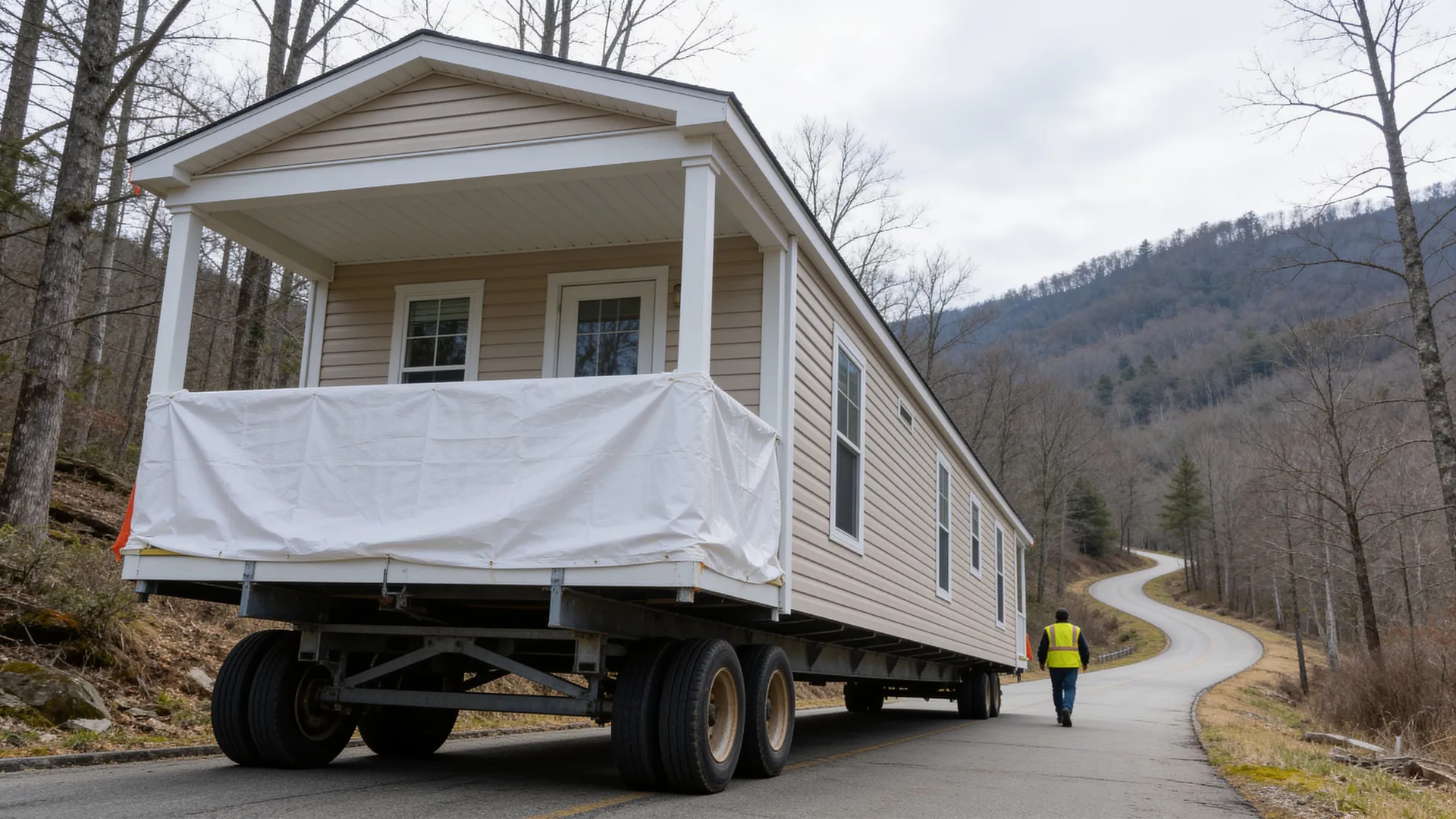
What a Cabarrus County permit actually costs
The fees the tax office and NCDOT charge for the permits themselves are modest — the permit line is one of the cheapest parts of any move. What people actually feel under the heading "permit cost" in Cabarrus County is the two conditions the permits attach. The first is the tax-clearance gate: the county won't stamp the moving permit until any unpaid personal- or real-property tax on the home is settled, and a back-tax balance can dwarf the permit fee many times over. The second is escorts — the NCDOT MH-2 permit scales the escort count with the home's width, and each escort is a paid, certified operator running the full route. A narrow single-wide may need no escort; a 16-foot-wide double-wide can require two on every highway, and race-week traffic near Charlotte Motor Speedway can shape the route on top of that. That's why a bare "permit: $X" line is misleading, and why we fold the tax-clearance status and the required escorts into the written quote up front. The full line-item picture is on our mobile home moving permit cost page, and the width-based escort thresholds are on our escort requirements guide.
What we handle vs. what the owner does
The permitting chain is ours to run. Our crew pulls the county tax-paid moving permit from the Cabarrus County tax collector, files the NCDOT MH-2 oversize trip permit and fixes the legal route, files the setup permit through the Accela Citizen Access portal for the receiving site, dispatches the NCDOT-certified escorts the width requires, and times the roughly seven-day tax window to the confirmed haul date so nothing expires on the shelf. The owner's part is narrow but real: settle any unpaid property tax on the home — that's a debt owed to the county, not a fee we charge — confirm the destination will actually permit the home under local zoning, and have the title in order. Siting is local zoning, not transport law, and Cabarrus County (like its neighbors) can restrict where a manufactured home lands, so we flag the destination rule before you pay for the move rather than the week of. The move itself runs disconnect → permit → haul → set, level, and anchor; Piedmont Cabarrus County sits in HUD Wind Zone I, so anchoring follows the federal frame-tie and auger-anchor standard at HUD 24 CFR Part 3280, Subpart G. The full set-and-level work is on our mobile home setup page.
Beyond the permit: the full Cabarrus County job
The permit is the paperwork; the move is the work. Our crew handles the whole job across Cabarrus County — mobile home movers in Cabarrus County for the haul itself across Concord, Kannapolis, Harrisburg, Mount Pleasant, and Midland. When an old unit has to come off the pad before the new one lands, we handle the tear-down too, the same way we do just north in mobile home demolition in Rowan County. If your move crosses into a neighboring county, the same permit chain applies with a different tax office — see Rowan County just north up I-85, Iredell County permits to the northwest toward Mooresville, or Stanly County across the line to the east. Headed west into the metro core, the same crew covers Charlotte, and the most common cross-state receiving end is Columbia, SC down I-77. Whichever county you're leaving from or landing in, we pull the permits and sequence them to one travel day.
Storms, FEMA, and permitted moves in Cabarrus County
Cabarrus County, NC has been included in 16 federal disaster declarations for storms and flooding since 1977 — among them Tropical Storm Debby (2024), Hurricane Helene (2024), and Hurricane Ian (2023). Every major storm puts manufactured homes on the move: damaged single- and double-wides hauled off, replacement units delivered, and families relocated — and each of those moves still needs the same permit chain, filed fast. When the wind passes, our crew is who you call to permit, move, set, or remove a manufactured home in Cabarrus County. (Source: FEMA OpenFEMA disaster-declaration data.)