
The question how old can a mobile home be to move it in NC has a short answer that surprises most people: North Carolina puts no age limit on the move itself. There is no build-year cutoff written into the state's moving law, no "your home is too old to relocate" rule at the DMV, and nothing in the oversize-permit process that checks a manufacture date. We move homes from the 1970s through last year's models, and the state doesn't blink at any of them. What actually decides whether an older home can move — and, more importantly, whether it can be legally set down at the other end — is a stack of three separate things, and confusing them is why people think NC has an age law when it doesn't.
Why there's no statewide age limit to move a mobile home in NC
North Carolina's mobile home moving law lives in NCGS Chapter 105, Article 18 — the moving-permit provisions start at § 105-316.1 — and if you read it looking for an age rule, you won't find one. The statute exists for a single purpose: to make sure a home's property taxes are paid before it can leave the county. The county tax office issues a moving permit only after confirming the balance is clear, because the tax follows the structure and a home rolling out of the county is a tax bill about to disappear. Build year never enters the calculation. The haul itself is authorized separately under the NCDOT Publication MH-2 oversize-permit rules, which size the escorts and travel window to the home's width, not its age. So at the state level, a 1974 single-wide and a 2024 double-wide clear the exact same two gates. The mechanics of both permits are laid out on our mobile home moving permit guide, and the full body of state rules on our North Carolina mobile home moving laws page.
The real ceiling #1: can the home survive the road?
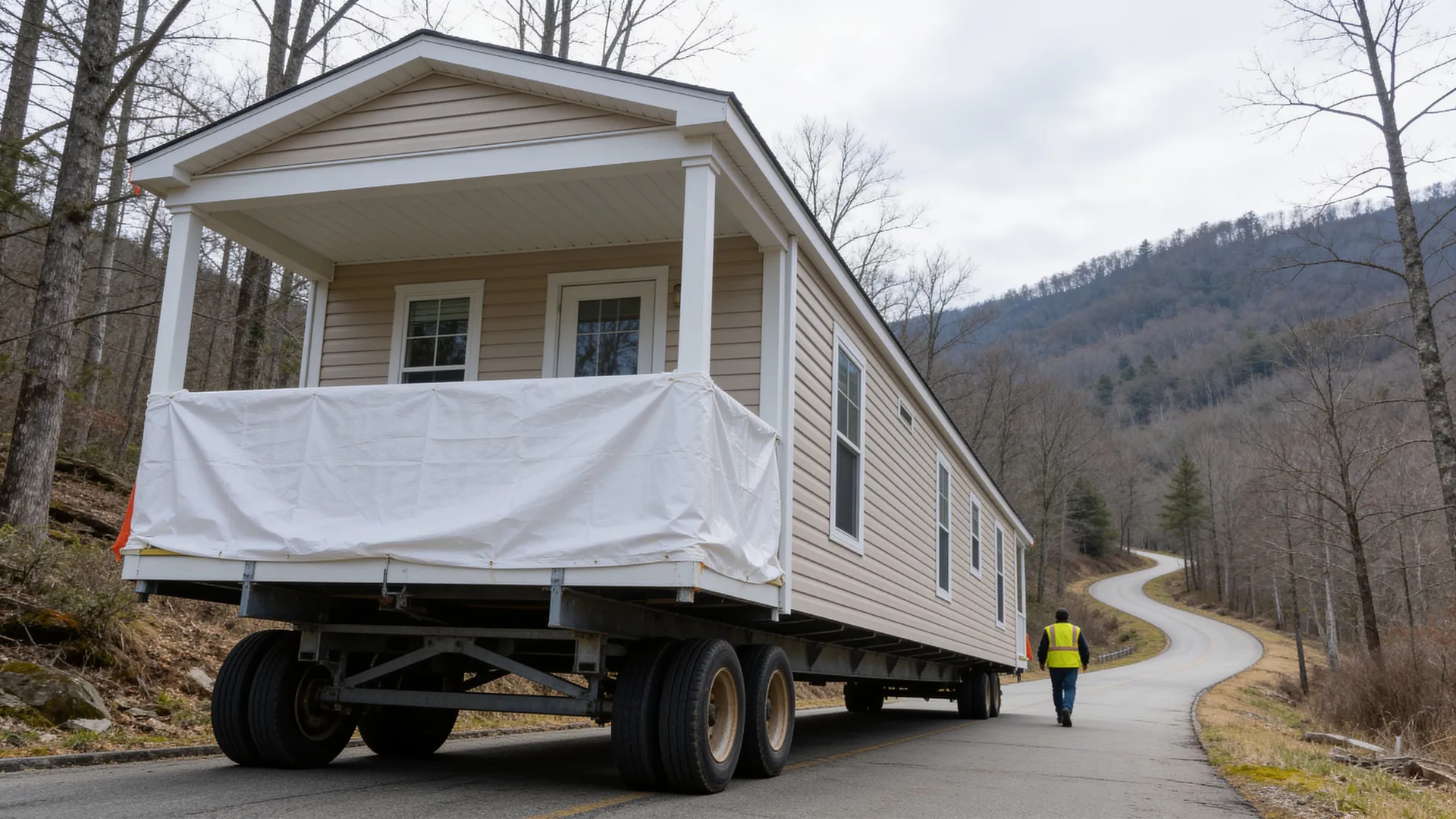
The first true limit on an older home isn't legal — it's structural, and it's our call as the crew towing it. An aged manufactured home carries an aged frame, axles, tires, and marriage line, and the road puts real stress on all of them. Before we move any older unit we run a pre-move structural check: is the steel frame straight and sound, or has it rusted and sagged? Will the axles and tires hold at highway speed, or do they need replacing first? Is the floor system solid, and is the roof intact enough to travel without peeling? On a well-kept 1990s home the answer is usually a clean yes. On a neglected unit with a soft floor and a cracked frame, the honest answer is sometimes no — and we'll tell you that rather than take your money and your home apart on the interstate. The complete road-worthiness question, unit by unit, is on our can a mobile home be moved page. Because older homes need more prep, they also tend to cost more to move — the real drivers are broken down on how much it costs to move a mobile home.
The real ceiling #2: will the destination accept a home that old?
This is the limit that actually stops most older-home moves, and it has nothing to do with the road. Towing is state transport law; siting is local zoning, and North Carolina lets every county and municipality write its own rule about how old a manufactured home can be to be installed in that jurisdiction. Many counties and towns require HUD-Code construction (post-June 15, 1976) and cap installation at homes 10, 15, or 20 years old, while a county with no zoning at all may impose no age rule whatsoever. The UNC School of Government's manufactured housing and zoning summary explains how NC localities are permitted to regulate placement. That's why the age ceiling is a destination question — and why we confirm the receiving county's rules before you pay for a thing. Age limits vary sharply county to county, from Rutherford and Burke in the west to Brunswick on the coast, and we track the specific pre-1976 rules for jurisdictions like Henderson, Polk, and Anson County.
Pre-1976 homes: legal to tow, usually impossible to set
The hardest age case is a home built before June 15, 1976. That date is the line where the federal HUD Code (24 CFR Part 3280) took effect and modern manufactured-home construction standards began. A pre-1976 unit is a non-HUD home, and most NC counties and parks refuse to permit its installation, full stop. So while nothing in NC law stops us from putting a 1972 single-wide on the road, the move only makes sense to a parcel that will actually accept it — typically unzoned rural land, or a lot where an existing home is grandfathered and being replaced like-for-like. We walk through exactly what's possible on can you move a pre-1976 mobile home before anyone commits to a haul that can't legally end.
If your home is too old for its destination — the options
When an older home can't legally land where you want it, you still have real paths, and we'll help you pick the one that fits. If the home is being replaced after storm damage, several NC counties run a state-funded demolition-and-replacement program — the eligible counties are on our Renew NC demolition & replacement page. If you're selling rather than keeping it, an older home can be moved to land that allows it or sold to a buyer who already has a qualifying lot — that's the market behind mobile homes for sale to be moved. And if the unit simply isn't worth relocating, we handle clean on-site demolition and disposal. Whatever the age of your home, tell us the unit and the destination and we'll give you the honest read — start a quote on mobile home movers near me, see full North Carolina coverage, or check how the rules shift across the line on our South Carolina mobile home moving laws page.